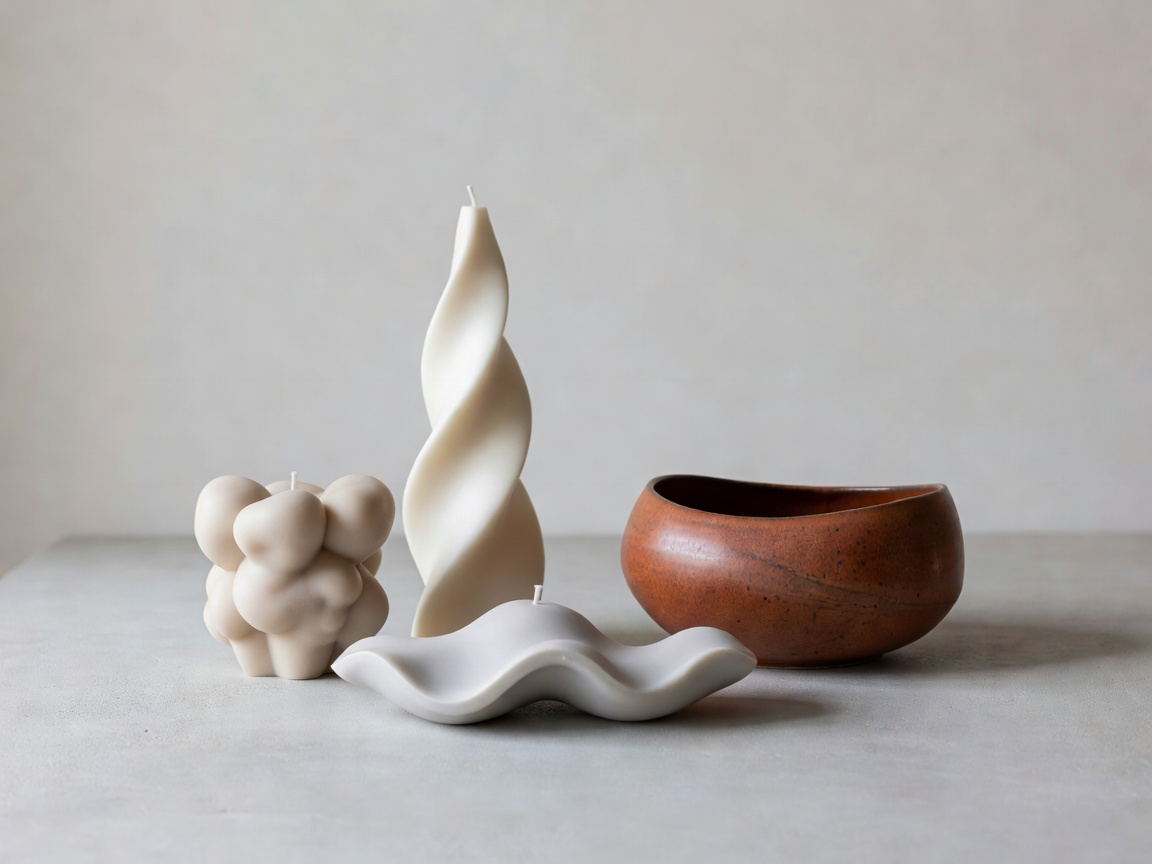
Contemporary candle studios work between object design and functional production. A studio may use established methods such as dipping, molding or vessel pouring while changing scale, surface, proportion or context. The result can be sculptural, minimal or materially expressive. Modern practice is not a single style. It is a set of choices about making, documentation, sourcing, presentation and the intended role of a candle.
Independent studios and small batches
Independent production often means a focused range, limited runs or a close relationship between design and making. Small-batch work can make it easier to assess material variation and revise a form. It also places demands on planning: makers need clear component records, repeatable checks and realistic production capacity. “Handmade” alone does not explain how an object was made or what controls were used.
A studio can document a product through material notes, process records, photographs and sample comparisons. This record helps separate intentional variation from defects. It also supports honest descriptions when wax color, surface or fragrance differs between batches. Useful documentation is factual and specific; it does not rely on invented heritage or unverifiable environmental claims.
Sculptural and architectural forms
Sculptural candles use shape as a central design feature. Geometry may reference columns, folds, steps, arches or other architectural elements without copying a specific historic object. These forms can be made through molds, assembled components or surface finishing. More complex profiles create practical questions about stability, wick placement, material behavior and how the candle is intended to be used.
A sculptural object may be primarily decorative, designed to burn, or intended for both roles. The distinction should be clear. A form that looks stable on a shelf is not automatically suitable for burning. If a candle is intended for use, the complete construction requires responsible evaluation. Design ambition does not replace appropriate materials, safety guidance or testing.
Ceramic vessels and material pairing
Ceramic vessels bring material weight, surface texture and color to a candle design. A studio may commission or make vessels, but the visual appeal of a container does not confirm its suitability for candle use. Shape, wall construction, glaze, base and compatibility with the wax-wick system all matter. Refillable concepts also require a considered approach to vessel condition and replacement components.
Pairing wax with ceramic is a design decision and a technical one. Surface adhesion, visible wax line, color and the relationship between vessel and wick can affect the finished object. Material changes should be recorded and evaluated. A vessel should not be described as reusable or suitable for a new purpose unless that claim is supported by its design and instructions.
Traditional methods, contemporary interpretation
Historical techniques continue to inform present-day work. Dipping offers layered form. Rolling preserves the texture of sheet wax. Molded production can carry familiar silhouettes into new proportions. Hand finishing can make variation visible. These methods may be adapted with contemporary waxes, tools and design language, but adaptation is not the same as uninterrupted historical continuity.
Traditional production usually responded to available materials, household need, religious practice and local trade. Contemporary studios may instead prioritize visual identity, a particular object scale or a carefully selected material palette. Both contexts deserve clear description. When an influence is known, name its nature. When its history is uncertain, describe the design reference without making a claim of direct lineage.
Packaging, identity and sourcing
Minimal packaging can reduce visual distraction and make an object’s form more prominent. It still needs to communicate relevant product information and protect the candle in handling and transport. Paper stocks, labels, inserts and shipping materials all have sourcing and disposal implications. A restrained package is not automatically a lower-impact package.
Sustainable-material decisions require more than a single “natural” label. Consider feedstock origin, processing, transport, additives, vessel lifespan, packaging and production waste. Availability and evidence vary. Describe known material characteristics and avoid broad claims that cannot be substantiated. A studio can make its choices easier to assess by stating what is used and what remains uncertain.
Studio branding gives a collection a recognizable visual system. It may use typography, color, vessel shape and consistent documentation. A strong identity should clarify the work, not obscure its materials or make unverified claims about place, history or impact.
Practical evaluation for a modern studio
- Define whether each candle is decorative, functional or both.
- Match the form to a suitable material and production method.
- Record suppliers, material changes and sample observations.
- Separate historical reference from documented historical fact.
- Assess packaging and sourcing across the complete product system.
- Use accurate descriptions and avoid unsupported performance claims.
Contemporary practice is strongest when visual intention and production choices are legible together. The form may be new; the need for careful material selection, testing and honest communication remains.