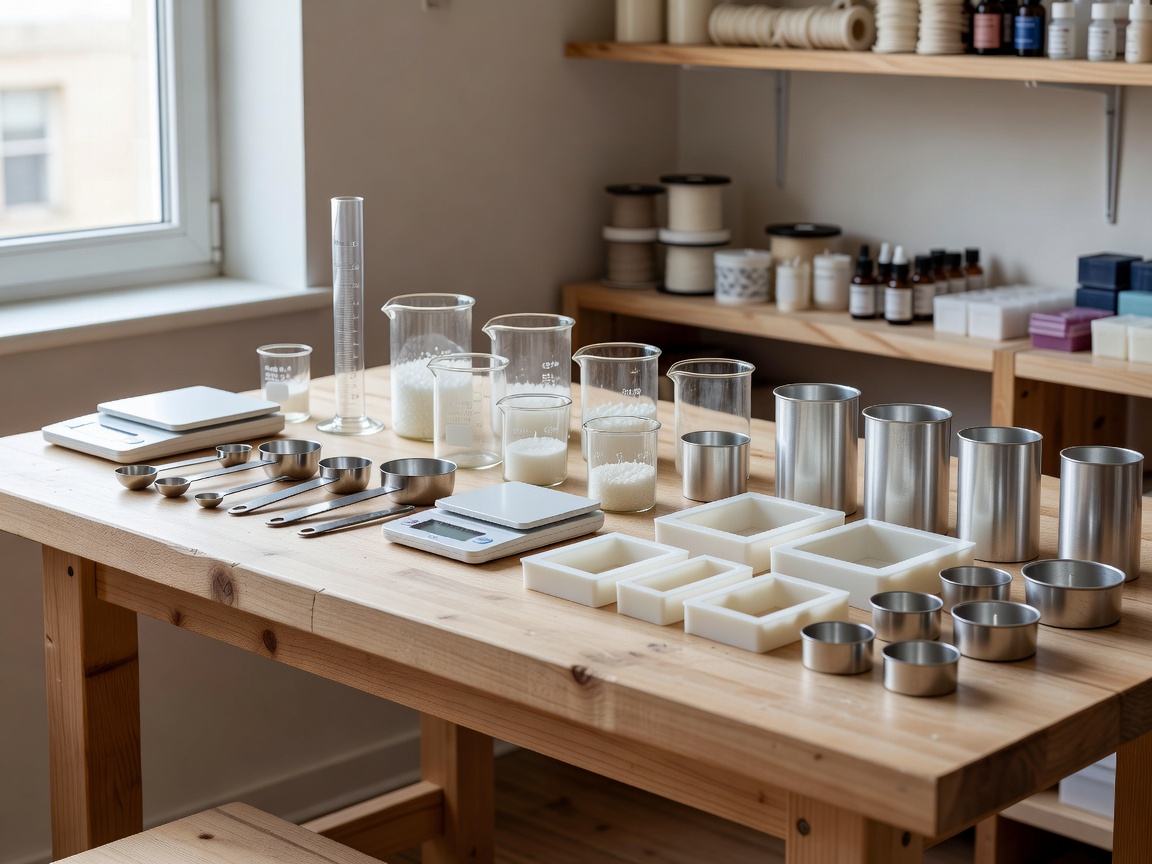
Candle studios use tools to manage materials, shape products and record what happened during production. Equipment should be appropriate to the material and scale of work. A professional setup is not defined by a long tool list. It is defined by clear responsibilities, safe equipment, orderly storage and repeatable quality checks. This guide describes tool categories at a high level; it is not a procedure for heating or pouring wax.
Core equipment categories
Melting equipment provides managed heat for wax preparation. Select equipment designed for its intended use and appropriate to the quantity and material handled. Follow the manufacturer’s operating and maintenance instructions. Do not use improvised appliances or leave heating equipment unattended. A studio should have clear rules for heat management and emergency response.
Pouring vessels are dedicated containers used to transfer material in a controlled studio process. Their construction, capacity, handle and pouring edge affect usability. Keep them identified by material or process where cross-contamination is a concern. Suitable vessels should be stable, maintained and used within their design limits.
Thermometers support process monitoring when material specifications call for temperature checks. Their range, accuracy, response and calibration status matter. Use them according to their instructions and record the measurement context. A temperature reading is not a substitute for material guidance or safe heat management.
Scales measure ingredients and finished components. Capacity and resolution should match the amount being handled. A clean, stable weighing area helps reduce mix-ups. Record units consistently and keep the instrument’s condition under review.
Molds and wick holders support shape and placement. Inspect molds for damage, cleanliness and suitability. Wick holders keep the wick in its intended position during production; they should suit the mold or vessel and the studio method. A neat setup supports consistency but does not establish that a candle is safe or ready for use.
Work surfaces, storage and labeling
Work surfaces should be stable, cleanable and appropriate for the tasks performed. Keep traffic routes clear. Separate material handling, assembly, finishing and packing where practical. Store equipment so hot, sharp or fragile items are not left in uncontrolled locations. Provide task lighting that helps staff inspect surfaces and labels without creating unnecessary glare.
Storage affects traceability and material condition. Keep raw materials in suitable containers, protected from contamination and clearly separated by type. Follow supplier storage guidance, particularly for fragrance materials and additives. Label containers with a clear identity and, where relevant, supplier details, receipt information and opening date. Never rely on memory or an unmarked container.
Labeling should connect a finished batch to its materials and production record. The label’s intended use and applicable legal requirements vary by market and product. Maintain a review process for label accuracy rather than treating printing as an afterthought.
Cleaning and ventilation
A cleaning routine prevents residue and cross-contamination. Define which tools are dedicated to a material, which require cleaning between uses, and how cleaning is recorded. Use methods compatible with the equipment and material. Do not pour wax or other residues into drains unless the relevant product instructions and local rules explicitly allow it.
Ventilation is part of studio planning, especially where fragrance materials or other substances are handled. Follow current safety information and supplier instructions for every ingredient. Assess the workspace, task and quantity rather than assuming that an open window is always sufficient. Keep material safety documents accessible to the people who use the products.
Quality control as a routine
Quality control can include checking incoming materials, recording formulation identifiers, inspecting wick placement, reviewing vessel condition and examining finished surfaces. Define what counts as an acceptable result for each product. Keep a record when a component or supplier changes. For candles intended to burn, responsible testing must reflect the complete combination of wax, wick, vessel, dimensions and intended conditions. Do not infer performance from appearance alone or use unsupported burn-time claims.
Records should be legible, dated and linked to a batch or sample. A concise log can capture component names, changes, observations and review decisions. Protect records from accidental loss and limit access to those who need them. Where a result is uncertain, pause release and investigate rather than relying on an informal recollection.
Organizing a safer studio
- Read and retain manufacturer instructions for equipment and materials.
- Keep suitable fire-safety equipment accessible and maintain it as instructed.
- Use appropriate ventilation and follow ingredient safety documentation.
- Keep work zones orderly and separate materials that should not be mixed.
- Use containers designed for the task; avoid improvised electrical equipment.
- Document changes and testing decisions before repeating a batch.
Safety planning should match the actual premises, materials and local requirements. A written routine is useful only when it is understood, maintained and followed.