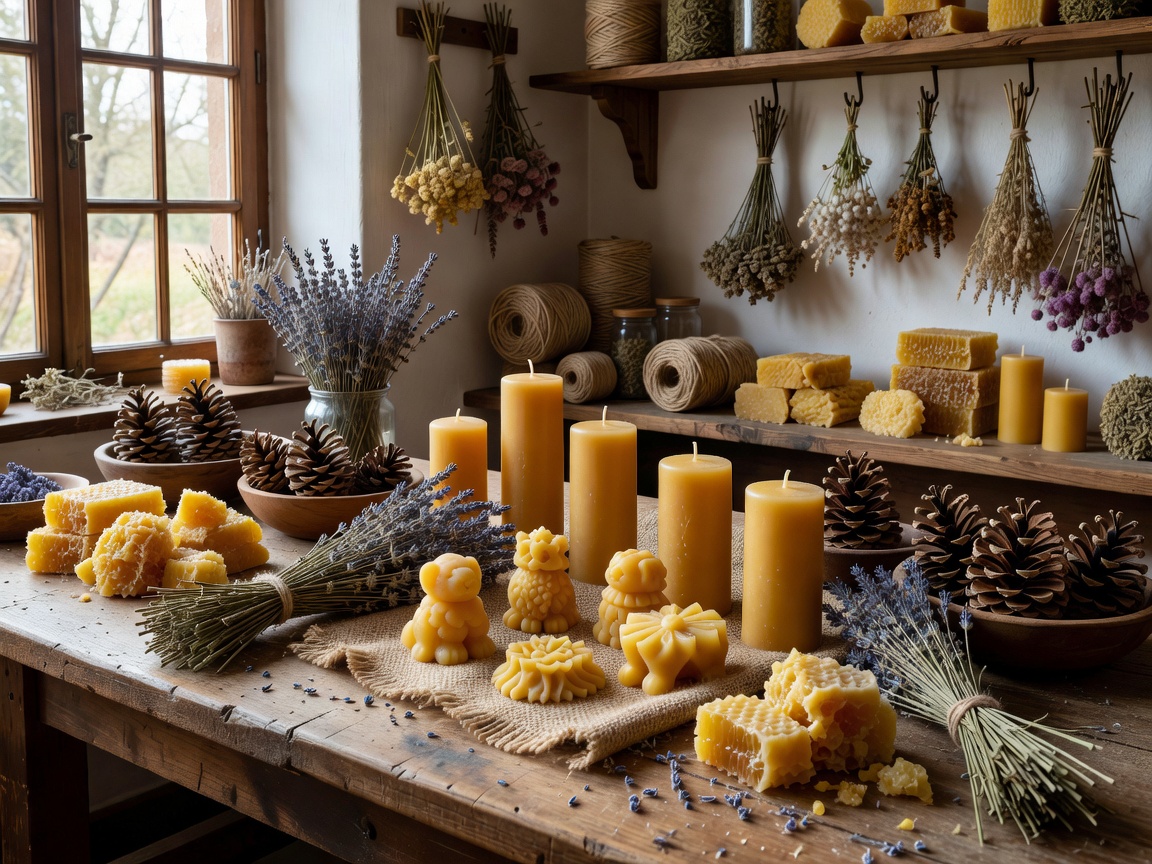
European candle histories do not fit neatly inside current national borders. Wax-working knowledge, raw materials, tools and design moved through trade and migration. Local practice also responded to climate, beekeeping, religious life, household lighting and decorative arts. The regions below are broad interpretive areas. They help organize questions; they do not assign a shared tradition to one modern country.
North and Baltic Europe
In Northern Europe, long winter evenings made reliable household lighting an important part of daily life. Animal fats, plant oils and beeswax had different availability, cost and uses across time and place. Beeswax carried particular value because it was associated with beekeeping and could be used in domestic, devotional and ceremonial settings. The balance between locally available material and traded supply varied. Historical use should not be confused with the formulation of a present-day independent studio.
The Baltic region connects northern and eastern routes, coastal trade and woodland landscapes. Beeswax and other commodities moved across political and linguistic boundaries. Local household customs and religious practice influenced how lights were made, presented and used. A regional account is strongest when it considers networks of exchange rather than claiming that one form or technique belongs exclusively to a single state.
Central and Alpine Europe
Central Europe includes varied landscapes, trading cities, rural communities and craft systems. Beeswax working could connect beekeeping with candle production, while urban trades helped serve households, churches and public spaces. The scale and organization of production shifted over time. Guild structures, access to materials and changing lighting technologies all influenced practice. Avoid treating “traditional” as a single, unchanged method.
Across Alpine Europe, mountain conditions, seasonal work and local materials shaped craft economies. Candle use reflected domestic needs as well as religious calendars and community events. Regional wood, ceramics and metalworking could influence holders and presentation, even when the candle material itself came through wider trade. Contemporary makers may draw on this material language without reproducing historical production exactly.
Western and Mediterranean Europe
Western European candle cultures developed through maritime and overland exchange, urban trades and changing domestic interiors. Beeswax, tallow and imported materials occupied different roles according to period, access and purpose. As oil lighting and later electric light altered daily routines, candle use shifted toward ceremony, atmosphere and decoration in many contexts. This was not a uniform change, and it happened at different speeds across communities.
Mediterranean Europe includes strong variation in climate, agriculture, port economies and religious practice. Wax could move through regional markets and longer trade routes. Candles and devotional lights have appeared in varied ritual settings, but specific customs differ between communities. Architecture also matters: the scale of a church, home or public space affects the type and quantity of lighting used. Contemporary studio production may reference these forms while working with modern waxes, vessels and safety expectations.
Eastern Europe and cross-border exchange
Eastern Europe is a broad cultural and geographic term. It includes different languages, climates, religious traditions and political histories. Beekeeping, forest resources and trade routes have contributed to local material economies in some areas. Household lighting and ceremonial use developed within community-specific contexts. These patterns should be documented with care rather than reduced to a single regional style.
Across all regions, trade connected makers to materials that were not locally produced. The movement of wax, dyes, molds and finished goods complicates simple origin stories. Techniques also travel through apprenticeship, migration and changing industrial systems. A form may be familiar across borders while its meaning and use vary locally.
Historical craft and modern interpretation
Historical candle use describes how lights were made and used in a particular context. Contemporary studio practice describes current production, design and material choices. A modern maker may adapt a dipped form, a beeswax color or a ceramic holder as a design reference. That does not make the new object a direct continuation of an earlier workshop tradition. Good documentation names the source of an influence where it is known and distinguishes evidence from interpretation.
When studying a regional practice, ask what material was available, who used the candle, where it was used, and how it was acquired. Consider the role of household lighting, faith, seasonal custom, trade, architecture and decorative arts. Look for multiple local accounts rather than relying on a national label. Where the evidence is uncertain, describe the context broadly and avoid exclusive claims.
How to compare places
- Materials: separate local production from imported supply.
- Use: distinguish everyday lighting from ritual, ceremonial or decorative use.
- Technique: record whether a process is documented historically or used in a contemporary studio.
- Exchange: account for trade, migration and cross-border craft knowledge.
- Design: consider holders, vessels, architecture and surface traditions alongside the candle itself.
This framework avoids treating Europe as a single candle culture. It makes room for local difference and shared histories at the same time.